
"Enhance Both Your Smile And Dental Wellness With The Transformative Benefits Of Dental Implants."
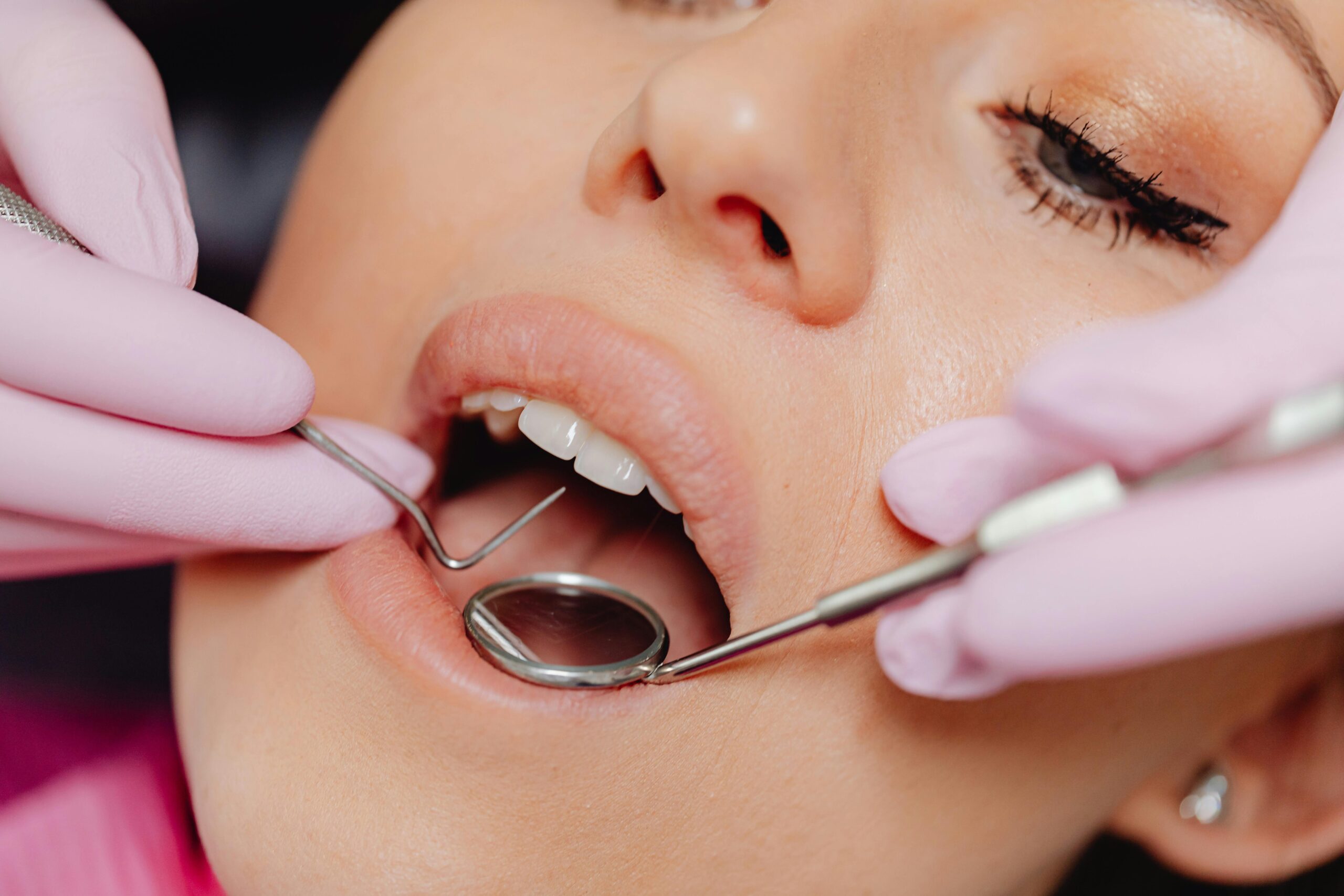
Dental Implants are titanium tooth roots that are surgically implanted in the jawbone to support replacement teeth or dental restorations. They provide a permanent remedy for lost teeth that restores both function and appearance. Implants, unlike removable dentures, are cemented in situ, ensuring stability and avoiding bone loss in the jaw. They enhance chewing abilities, pronunciation, and general oral health. Implants also help to retain the natural form of the face by preventing adjacent teeth from drooping and moving. With proper maintenance, dental implants can last a lifetime, making them an important investment in long-term dental health and confidence.
Dental Implants Are The Best Way To Replace A Missing Tooth Or Multiple Missing Teeth
Dental implants are usually considered as the best option for restoring a single tooth or several missing teeth. They are a permanent and sturdy alternative to dentures and bridges, with a natural appearance and feel. Implants are surgically implanted in the jawbone and merge with the bone, ensuring longevity and stability. This integration promotes jawbone health, reducing bone loss that often occurs after tooth loss.
Unlike conventional bridges, dental implants do not impact surrounding teeth. With appropriate maintenance, they can last a lifetime, making them an affordable and dependable long-term tooth replacement option.
Missing teeth can cause a range of dental issues, from difficulty chewing and speaking to bone loss in the jaw and shifting of surrounding teeth. While there are several options available for replacing missing teeth, dental implants are widely considered to be the most effective solution.
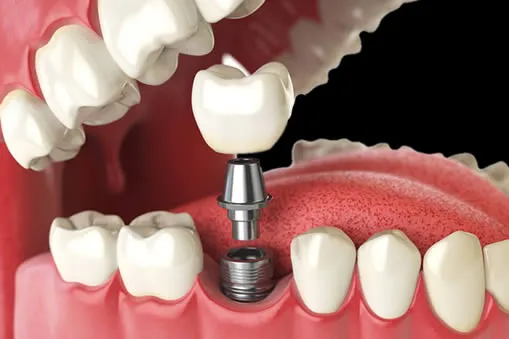
Single Dental Implants
Single dental implants provide an excellent solution for replacing a missing tooth. Once the implant fuses with the jawbone, a custom crown is placed on the post, resulting in a natural-looking and fully functional tooth. This approach not only restores the appearance of your smile but also enhances oral functionality and prevents adjacent teeth from moving out of place.
Implant Supported Dentures
Implant-supported dentures are an excellent option for individuals missing most or all of their teeth. Unlike traditional dentures, which use suction or adhesives, these dentures are secured to dental implants, ensuring a stable and secure fit. This advanced treatment improves speech, provides greater comfort, and boosts confidence when eating, smiling, and speaking.
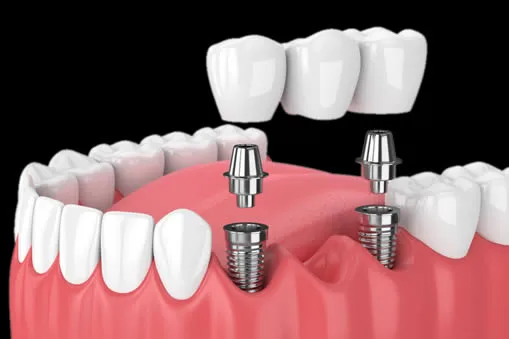
Implant Supported Bridge
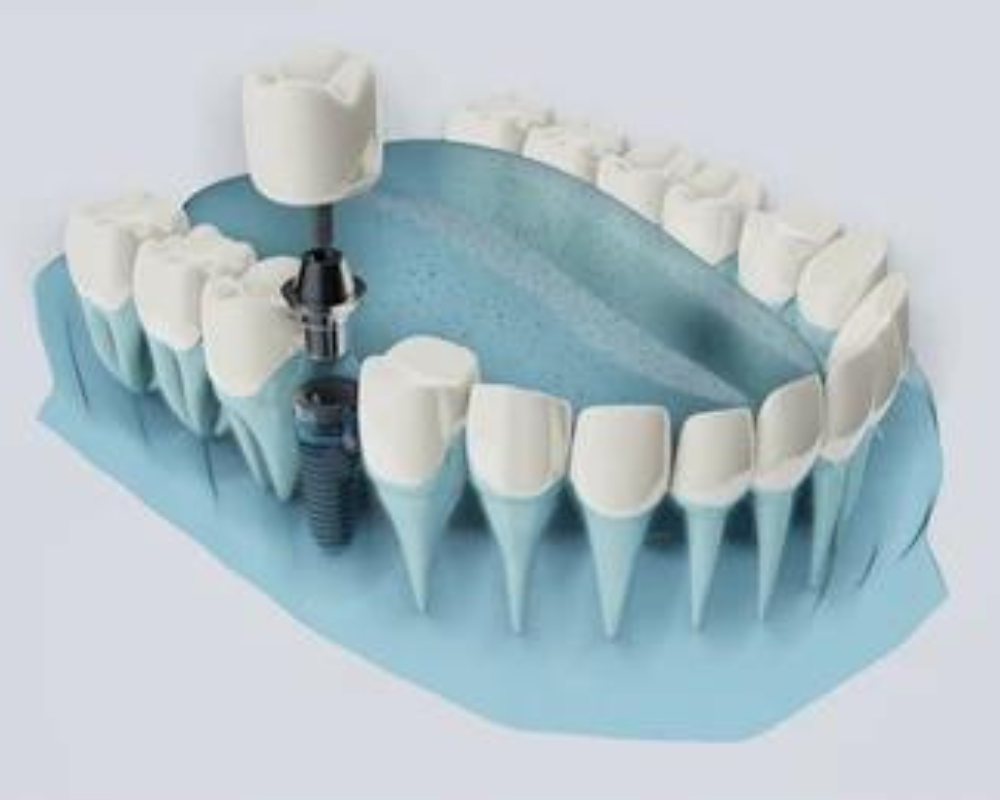
Fixed dental bridges supported by implants provide an excellent solution for replacing several missing teeth. This restoration method uses implants to anchor a bridge with multiple artificial teeth, ensuring a stable and durable fix for tooth loss. This approach offers a reliable and long-lasting way to restore both function and appearance.
Full Mouth Dental Implants
Full arch dental implants provide a complete solution for those who have lost most or all of their teeth. This procedure places several implants across the upper or lower jaw, creating a solid base for a custom set of replacement teeth. Full mouth dental implants significantly improve oral function, enhance appearance, and boost self-confidence.
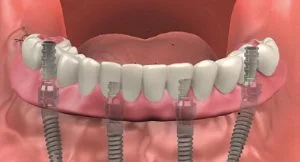

All On Four
All on Four dental implants is the rehabilitation of edentulous patients.It is done by placing four implants over which the prosthesis with teeth is fixed.
The Advantages Of Implants Over Traditional Dentures
Dental implants have several advantages over Traditional Dentures.First and foremost, dental implants provide a permanent solution for tooth loss. Unlike dentures that may slip or cause discomfort, implants are anchored into the jawbone, providing stability and a natural feel. This means that patients can speak, eat, and smile with confidence, without worrying about their dentures shifting or falling out.Another advantage of dental implants is that they help to preserve the jawbone. When a tooth is lost, the bone in the jaw can begin to deteriorate over time. Dental implants mimic the natural tooth root and stimulate the bone, promoting growth and preventing further deterioration. This can help to maintain the shape and structure of the face, ensuring that patients look and feel their best.
FAQs
Most patients report experiencing little to no pain during the dental implant procedure.
Not everyone is a suitable candidate for dental implants. Patients need to have healthy gums and adequate bone density to support the implant.
Dental implants are designed to be a long-term solution for tooth loss. With proper care and maintenance, they can last a lifetime.
Dental implants can be removed, but it is not recommended unless absolutely necessary. This process can be complicated and may require additional surgery.
Most dental insurance plans do not cover the cost of dental implants. However, some plans may cover a portion of the cost, depending on the plan and the individual’s circumstances.
Smoking can have a negative impact on dental implants’ success rate. Smoking can increase the risk of infection and hinder the healing process.
In some cases, dental implants can be completed in a single day. However, this is not always possible, and it depends on the individual’s needs and circumstances.
There are several alternatives to dental implants, including dentures and dental bridges. However, these options may not be as long-lasting or effective as dental implants.
The success rate of dental implants is very high, with a success rate of over 95%. Factors that can affect the success rate include a patient’s overall health, the location of the implant, and the skill of the dental professional.
There is no age limit for dental implants. As long as a patient has healthy gums and sufficient bone density, they may be a suitable candidate for dental implants.
Dental Braces(Orthodontics)
Braces are a typical orthodontic treatment that corrects incompatible teeth and improves jaw function. They are made up of metal brackets attached to the teeth and joined by wires and straps. Braces work by exerting modest pressure over time to shift teeth into the desired position. This procedure can treat a variety of dental disorders, including overcrowding, spacing abnormalities, and misalignment. While classic metal braces are the most well-known, there are other more inconspicuous choices like as ceramic braces and transparent aligners. Adjustments must be made on a regular basis to assure growth and obtain the intended results, which can take anywhere from months to years.
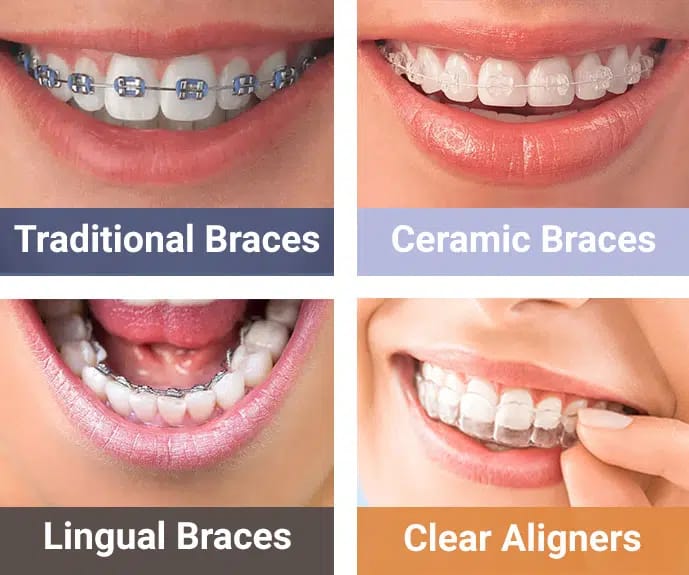
Types of Braces that are Involved
1
Traditional Metal braces :Traditional metal braces are made out of metal brackets attached to the teeth and connected by wires and elastic bands. They gently reposition teeth into normal alignment using gentle, steady pressure.
2
Ceramic Braces :Ceramic braces work similarly to traditional metal braces, but are less apparent due to tooth-colored or clear brackets. They provide a discreet orthodontic solution for those who are concerned about the appearance of their braces.
3
Lingual braces: Lingual braces are metal braces that are implanted on the inside surface of the teeth, making them almost unnoticeable from the outside. They provide an unobtrusive orthodontic option while yet achieving good tooth alignment.
4
Clear Alingers: Clear aligner braces, like Invisalign, are clear, removable trays that gradually bring teeth into alignment. They provide an almost unnoticeable orthodontic treatment solution that is suitable for those who value discretion.
Why Dental braces (Orthodontics)
Dental braces are essential for correcting misalignments and imperfections, which benefit both dental health and appearance. They aid in the appropriate alignment of teeth, lowering the likelihood of dental disorders such as tooth decay, gum disease, and jaw troubles. Braces also improve bite function, making chewing more effective and minimising excessive wear on teeth. Correcting alignment difficulties can increase confidence and self-esteem by resulting in a more appealing grin. Overall, dental braces help to improve oral health, function, and confidence.
Additional Frequently Asked Questions About Braces
Dental braces are devices used to correct misaligned teeth and bite issues.
Typically, braces are worn for 1 to 3 years, depending on the severity of the misalignment.
There can be some discomfort and soreness initially and after adjustments, but it usually subsides in a few days.
Yes, braces are effective for adults as well as children.
Generally, every 4 to 8 weeks for adjustments and monitoring.
Yes, you should avoid hard, sticky, and sugary foods to prevent damage to the braces and teeth.
Options include traditional metal braces, ceramic braces, lingual braces, and clear aligners like Invisalign.